Posted by: wrightbro2 | October 29, 2009

Cut-Up Correspondence

PA278321

Dusk on a boat named Henry

FOREWORD: Below are more snippets from e-mails to friends.

Where I am now I can’t exactly say. I’m somewhere between Iquitos and Pucullpa, Peru. I’m on another boat, one of the several on which we traversed these endless rivers. The Amazon River is to the north. We now motor south down the less picturesque, more dangerous Ucayali river. The security man with a shotgun says there are pirates, that the boat has been attacked several times, but it’s hard to imagine the gentle villagers I’ve seen up until now rocketing towards the barge in motorboats. During his night watch he pulls up a plastic chair close to where we sleep, plops down, and rests his rifle on his legs, many times with the barrel pointing in our direction. He’s obviously illiterate.  Sometimes he leans on the long steel barrel like Frank Sinatra while he talks to us in an Amazon bumpkin Spanish I find difficult to decipher. But he still has ten fingers and two hands—that’s reassuring.

PA278294

Home Sweet Home

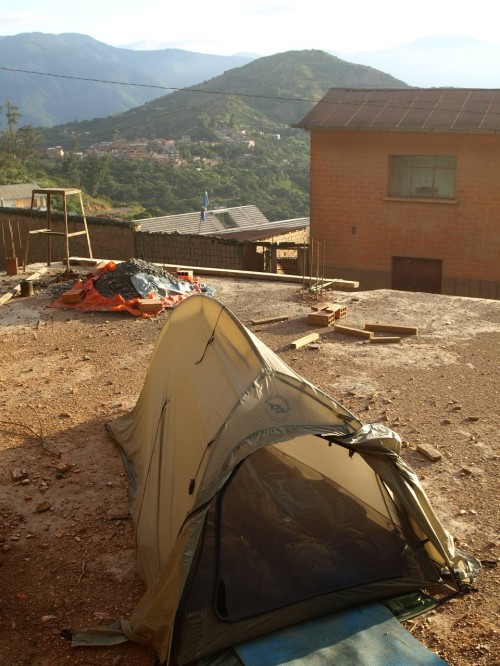
At the moment my world view is through the unzipped door of a three-person tent. The riverbank is 30 yards to my left. The motor churns loud and constant, belching a stream of thin black smoke from the stern chimney, also 30 yards away. Instead of hammocks, my travel partner Max and I decided to sleep on the roof of this passenger barge called Henry. We couldn’t believe our luck in having the entire top to ourselves, which we named ‘Penthouse Henry’ while setting up camp the first night. Why would anyone sardine himself into the lower hull when so much fresh air blows above? Silly us. It’s because this is the Amazon. At night our spot is the ripe jealousy of every unresourceful passenger who sleeps with someone’s foot in their face. During the day, it’s just hot as hell. Despite the slight shade the captain’s helm provides, the tent is at best, sucking water from my every pore; at worst, slowing cooking me until heat exhaustion strikes mid-sentence. My navel, as I sit reclined against my backpack, is a pool of sweat soon to overflow. The metal roof—our floor—heats up like an oven and needs to be hosed down periodically to keep the inside passengers cool. Max and I have become friends with the go-to volunteer waterboy. When we see him climbing up the side of the boat dragging the long, green hose behind him, we know it’s time for a rinse. The next hour or so consists of us playing in the spray, staring dripping wet at the scenery, and laying in the sun with the occasional playful douse waving over us. Life is good, and could be great if it wasn’t so ungodly hot….

PA298324

Playtime

Here’s some other news from my side of the world:

PA298350

Max

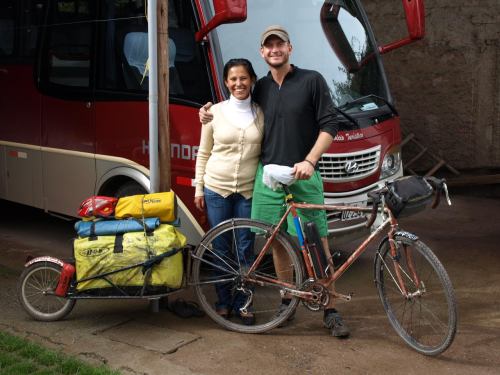
I’m traveling with a 22 year-old vegetarian Don Juan named Max. Though young, he’s wise beyond his years, fearless, and definitely on the same path of self-discovery as I, only he’s much better about sinking into creative storms of guitar, writing, meditation, and yoga. (I’m inconsistent lately with my harmonica, yoga, and poetry). Max traveled from his hometown near the French Alps to the Canary Islands, then to Senegal, then across the Atlantic to Trinidad & Tobago in a sailboat. In Venezuela he bought a bike and headed south. We met in Quito. It just made sense that we continue together. It’s been more than two months since we’ve paid for accommodation. We camp every night and bathe in rivers. We’ve developed a keen sense for meeting people who will let us throw down the tent in their yard, lend us a spare bedroom, or refer us to someone who will. As you can imagine, we’ve met some characters this way, not even half of whom make it to the blog, unfortunately. South American hospitality is bottomless. The future Couchsurfers I host will receive the same selfless hospitality above and beyond what I offered in Austin. This will be me paying into the karma cycle that has given me so much. Max and I will travel as far as Cusco together, arriving sometime the first week of December. In Cusco I’ll leave my bike with a trusted someone, then begin the long bus journey to Santiago, Chile to meet up with my father. I don’t have enough time to bike to Chile as originally planned. My father arrives on December 13th, the 14th we fly to Patagonia to hike for ten days in the in the National Park Torres del Paine, return to Santiago to meet my mom at the airport, then will spend Christmas and New Years in the Santiago/Valparaiso and surrounding area. Valpo is supposedly a huge glowing Roman candle on New Years, with fireworks reflecting off the bay, the whole city in festival mode. Hundreds of thousands flock to see the show. Luckily, I was able to book reasonably priced accommodations during that time. Hotels, I’ve learned, charge up to 300% more than their normal rate during this time. Once my parents leave I’ll stick around Santiago, visit a Chilean friend, then bus back to Cusco, bike to Bolivia, then finally arrive to Brazil! Brazil! Brazil! By April I will have an apartment, high-intermediate Portuguese, and a social life in southern Brazil. I’m still undecided whether I’ll bike north to Bahia, bus it for a visit, or curl up in my sedentary life while I learn the language.

PA188117

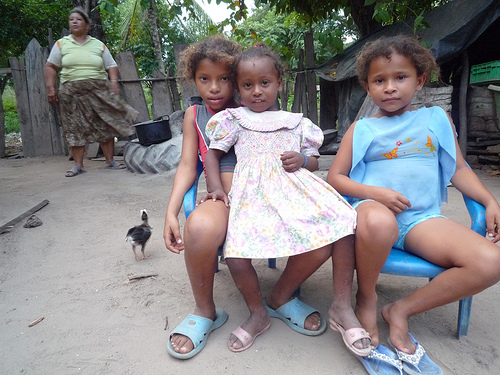
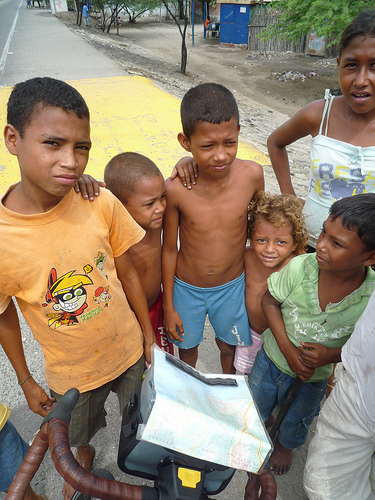
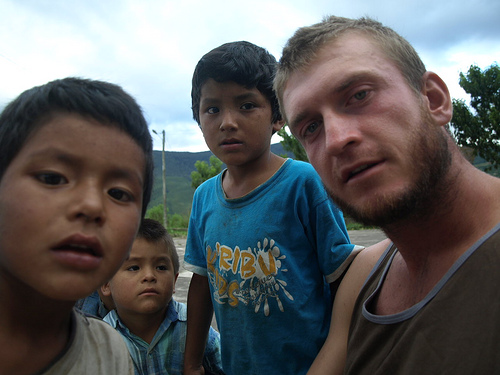
Here is a gypsy moment you will appreciate: in the charming Peruvian border town of Pantoja, fairly deep in the Amazon and only reachable by fishing boats contracted in Ecuador, Max and I met a man while off loading our bike gear. In no hurry since the next boat didn’t travel down river for another three days, we sat by the shore and answered this man’s questions about our trip—the same ones I answer everyday when I meet people. At the same time a small riot of kids accumulated around us, all respectfully curious. Many had never ridden a bicycle. The man eventually invited us to stay with he and his family. Their home was an open-air thatched structure, with a fire pit stove in the main area, chickens roaming the dirt floor, and a make-shift bread oven that provided income three times a week. He insisted we eat all his wife’s local dishes, drink chicha, and pick fruit from his trees as if they were our own. Later, he fell asleep on the hammock. We left to walk around town. Upon returning to our tent the man’s 80 year-old father invited us to a drink with his friends. They looked as if they had been at it for awhile. The old timer was by far the most coherent. He told many stories as old timers do. Then Max brought out his guitar. He’s learning, which means he doesn’t play or sing particularly well, but like I said he’s fearless and doesn’t embarrass easily. He began to play and sing and the old timers who were by now somewhat comatosed began to perk up, they began to remember that they too are humans and not dead yet. And they began to dance, clap, and sing! Yes, they were drunk, but it was endearing. I then brought my harmonica and made a true mess of the scene. They all wanted to huff and puff into it. The 80 year-old father even played pretty well, blowing his whole being into the tiny slats, nothing in tune with Max’s bellowing. He didn’t care, he was lost in his music. We were making such a scandalous noise that the neighborhood eventually lined the door in silent awe, as if observing a crime scene. The old men kept singing, clapping, dancing. When we finally called it a night, the father who had been playing the harmonica, handed it to me appearing quite sober, and said, “I haven’t felt so alive in years.” It was a true travel moment. For the next couple days every time I’d encounter the father in the village he sang out a different salutation, no matter the distance between us, his arms forming a waltz as if he had once again found his dance partner and could nothing less than two-step across town to communicate his joy to the world….

Signing off I thought you’d like to know that this letter was typed under the watchful eyes of five, yes, five child and adult Peruvians mesmerized by the fact that I can push the little letters without watching my fingers. All leaned in as I tactfully evaded the “How much did that machine cost?” question by saying it was a gift. I didn’t have the heart to tell them this highly affordable, highly portable netbook would set them back one month’s paycheck, that they will probably never own one unless they steal it from me. Of course, I wanted to avoid that too….

PA308357

Posted by: wrightbro2 | October 25, 2009

Time to Slow Down

Cabo Pantoja's loaded deck

Cabo Pantoja's loaded deck

FOREWORD: The following e-mail was drafted to a friend while abroad the Cabo Pantoja barge that travels twice monthly between the Peruvian border town of Pantoja and the the strange jungle metropolis of Iquitos. Since October 14th I’ve been traveling on different types of river transportation, including fishing boats, dugout trunks, aluminum speedboats, and a barge loaded with 6 charging bulls, 100 pigs, 150 passengers, and 500 roosters—none of which sleep late. The cargo of countless items was piled in hard-to-describe ways; the middle and top deck were webs of intricately sewn hammocks. Some guidebooks state “This trip requires plenty of time and patience,” which is an understatement that cannot prepare you for sensory overload of life in slow-motion. I’ve wanted to embark on such a trip for as long as I can remember. Everyday was, without any poetic exaggeration, an adventure, though be it a slow one. Please note: next Monday the 26th I will embark once again on a four-day journey to Pucullpa, Peru. Internet is scarce but expect plenty of insight and photos when I return.

…I haven’t had internet access, which is why I haven’t responded earlier. Now after so much time has passed I don’t know where to begin. You’ve probably read on my blog about Surly and my near-death experience. I’m exaggerating, of course. But things could have been much worse, my head instead of hip could have hit the cement, my impossible-to-find rims could have bent instead of Surly’s weldable frame. I’m fine, he’s fine, no worries. He now looks like some of the scrap bikes people use to load and sell fruit. I doubt most thieves would pick him out in a crowd. One of the sons from the family we were staying with by the river did fancy my iPod, however, and stole it from my bags when we left them behind to bus back to Tumbaco to fix our bikes. I wasn’t even able to confront the teenager because he was away and we had to pack quickly to catch a bus to catch a boat that only embarks twice monthly. I’m over the iPod. It doesn’t matter, and besides I have a few unsold Nanos to replace it. Even in the moment I was more upset by the broken trust and the bad vibes that began to replace all good memories I would have preferred to keep, the incredibly intense and positive Ayahausca experiences with the kid’s Shaman father, the camp nights by the river under the stars, the lazy days reading and playing with the kids. Now I don’t care to know anything more about the place or the family. The energy there fell on its head, a complete 180. It’s for the best you didn’t load up my black iPod with a carefully planned playlist. I’d be physically sick with rage and might have waited around to threaten (or worse) the kid, missing the boat, delaying my trip, and who knows what other negative consequences would have rained down. It’s done and over, and I almost forgot about it completely until I wrote in this summary of happenings. [10/24/09 UPDATE: My point-and-click camera was also stolen while off loading bikes in Iquitos. Yeah, FUBAR, but I'm still surprisingly zen, as if thieves one by one are stripping me of my electronic chains, ha. I'm going to write a post addressing all the of late opportunist theft while trying to put them in context (e.g. my camera = one month of full-time construction work)].

Today is day three on the slow boat through Amazonia, though we’ve been traveling in the region for four days before this barge, arriving just in time to catch this loveable rust bucket to Iquitos. While traveling in a dugout canoe from the Ecuadorian border into Peru I saw my first river dolphin. Apparently, there are pink and grey pods of them all over the interior. Think about that. Dolphins in the middle of a freshwater continent! I still can’t believe it, and have been on the look out for shiny pink bald heads skimming the water’s surface ever since. That same night, on different passenger boat, we got hung up on a tree trunk. Bottomed-out is a better word. Imagine, again, 50 people in a giant canoe overloaded with supplies stranded in the middle of an oceanic river. And nobody cares! No talk of official complaint letters. No angry self-important old man spreading negativity. Just quiet, calm acceptance—because what could we do anyway. Max and I were having a great time. We directed the rescue effort and were some of the first ones in the water pushing us free. The sky was too beautiful, with shooting stars every few minutes, to worry about arriving on schedule. I guess it helps that for us no such schedule exists, ha. It was a minor two hour Amazonian traffic jam I’ll never forget.

I just finished my sweet rice soup and bread rations and sat down to write for the first time this trip. From the top deck of this three-story barge, where my hammock is hung, the stars shine clearly, even brighter than our night on the log, nothing but blackness above, the river and sky and treeline just different shades of dark. There is zero light pollution in this disconnected nowhere—which makes stargazing in my first south-of-the-equator sky all the more incredible. Last night I laid awake until morning watching stars move above the trees from my hammock view as we motored south. Their orbit, or Earth’s orbit, or our southern progress—I’m not sure which—can actually be seen in the shifting constellations, but only with patience. The morning sun arrived as I drifted in and out of sleepy observation. I was exhausted all day but it doesn’t matter. I nap when I want, eat bananas when I feel like it (we bought 100 for US $1), and eat meals on a schedule only because the pots would be scraped dry by the workers if we were to arrive late.

Brazil, the man, not the country

Brazil, the man, not the country

Tonight storm clouds threaten from a distance and the same jungle that lines the river flashes into view with the muted lightning. Midnight rains are possible. Now, as I write, a Brazilian with whom I’ve become partners in crime (we jump off at loading stops to knock papayas off trees) sings from his hammock. Any significant event—significant is relative on a five-day journey through monotonous terrain—sets him singing, and his jolly song has made him a minor boat celebrity, despite the fact most can’t understand his muttered Portuguese. They’ve nick-named him, uncreatively, ‘Brazil.’ When his name is uttered it’s usually accompanied by a bad Portuguese accent or famous Brazilian soccer chants that crescendo into a hoodlum chorus if left unchecked by some funny, usually not understood, come-back by Brazil himself. Besides our mutual fruit interest, I’ve been practicing Portuguese with him. I understand all but the most obscure words, all but the most extreme mumbles, which has motivated me to study my 501 Verb Book each afternoon and begin ‘The Alchemist’ in Portuguese. Maybe rain and thunder and pelted plastic roofs will make ‘Brazil’ sing tonight. I hope it rains.

You’d love this trip. There is much and nothing to do at the same time. Actually, come to think of it, I’m not sure you’d love this trip. There is definitely no running aboard and physical exercise that is not directly connected to lifting bananas or pulling roped-cows down steep riverbanks seems to be frowned upon, or at least thought a weird foreign custom. My few attempts at basic yoga movements and stretching on the top sun deck stir up a lot of interest. Hammocks are the game; passengers swing back and forth all day like hibernating cocoons, especially in the covered second level where I suspect the families and children are afraid of our third level’s rowdiness and sudden, spontaneous binge drinking bouts. (Max and I have made many friends with our refilled liter Coke bottle of sugar cane alcohol).

Ba-Na-Na

Ba-Na-Na

The boat makes periodic stops at isolated grass huts and small villages to load bananas. Sometimes it seems we spend more time loading than advancing. Families grow bananas then sell them to the boat captain, who in turn sells them to vendors in Iquitos for five times as much (etc, etc, with cows, chicken, pigs, wild boar skins—the same-old take-advantage-of-the-indigenous economics). Sometimes a school is the centerpiece of the settlements we visit, distinguishable only by the rows of children that file out in chaotic silence when we approach shore, but more often than not the stilted homes near the river are the community. Education doesn’t help grow bananas or catch fish, after all.

They smiled two seconds later...I'm fun, I swear

They smiled two seconds later...I'm fun, I swear

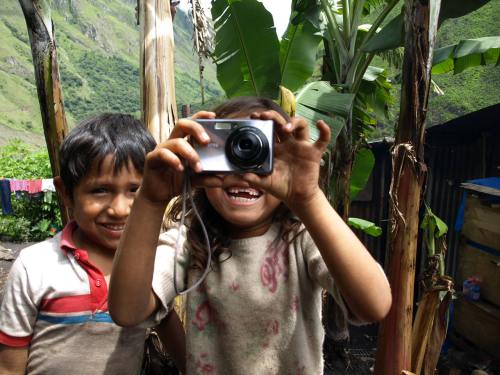
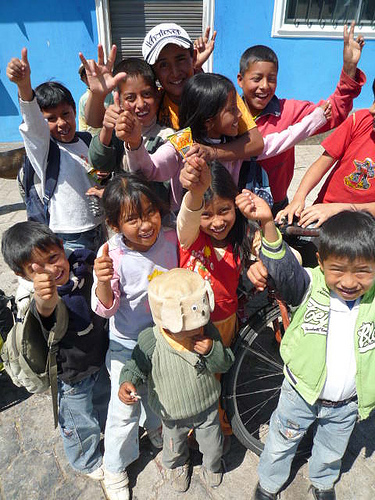
Max managed to take better photos of the village architecture. I mostly played with the energetic kids that flocked to us at each stop. The whole town lines the river when our boat bounces off the mud bank, the wooden plank slapping down between gunnel and banana pile, the workers gathering up the bounty without words or instructions. Our arrival doesn’t cause great excitement in the people anymore—one big boat or another arrives every five days—and I wouldn’t describe their presence as pure curiosity either, though I’ve been mobbed by kids and adults alike begging for their photo to be taken then viewed on my digital camera. The trick never gets old and I’ve taken some decent portraits this way. In a way, the people watch the boat happenings the same we (tjpse who don’t live in the Amazon basin) watch annual parades with the advance knowledge that it won’t ever be as exciting as the first, candy-chasing time.

Like a car accident

Like a car accident

They line the shore and stare and point and respond to Max and I’s jokes because there is nothing else to do. Our landing is a local football match where the players don’t play particularly well but still provide better entertainment than watching wild pig skins dry. (Many stretched, smelly boar skins are loaded at each stop). Actually, there was one event that was entirely new to all involved. Max’s dreads and my now shaved head seemed to entertain one fairly large town to the point of laughter. One man took Max’s rastas in hand, pulled hard, and kept the few hardened blond hairs as a prize. There was no answer, no response whatsoever, just smiles, when Max asked for an explanation.

No one seems to be in much of a hurry—which is why the elders seem so vital, I suppose. No stress. Sometimes, the banana piles lay in the sun untouched for more than an hour as the workers drink fermented yuca called masato (known as chicha in Ecuador) with the villagers, or go off in search of their girlfriends, free meals, or sugar cane alcohol (all speculation). The same passengers, our drinking buddies, are also in no hurry to arrive to Iquitos. Most have wives waiting for them that, they say, stamp out the kind of timeless child-like adventure they feel on the open river.

At night, we play chess or talk or drink a few rounds. Neither Max or I have any money since we refused to exchange dollars in Pantoja, where few stores have a monopoly on everything, including the town-wide robbery rate for soles, Peru’s currency. The boat’s ticket collector agreed to let us abroad with the promise that one will stay with the bikes in Iquitos while the other goes to an ATM. While everyone else buys beers, Cokes, and crackers from the ship store, we munch bananas. It’s been an easy week on the wallet, and I have a feeling Peru and Bolvia will be shockingly cheap compared to my Colombian/Ecuadorian splurges. Max arranged a Couchsurfer host in Iquitos, an older gentleman who works as a jungle guide. We’ll both hoping he’ll take us out, show us around, maybe even with a group for free. (10/24/09 UPDATE: The jungle guide CSer didn’t answer the phone numbers he provided us. Instead, we met another Peruvian CSer named Jessica who lives in hostel that is currently under-construction. They are adding a second story, all the rooms are without roof, even the bathrooms. There is something liberating about a shower in a room without a ceiling, as if rinsing in pure rain water itself. Until the remodeling is completed, Jessica and the French owner Patrice sleep under the only protection from the elements: on three bare mattresses under a thatched roof that opens to a noisy street. It feels like a slumber party when we all lay down for the night).

And of course there is a lot of time to reflect, meditate, think on a barge that travels only slightly faster than the water flows….

Posted by: wrightbro2 | October 11, 2009

Sometimes Dreams Pop like Amazonian Potholes

Smooth riding....

Smooth riding....

Bumps in the road—inverted and gaping as the monster pothole that sent both Max and I flying through the Amazonian night—are a part of bike travel. They, in fact, keep you guessing, aware, awake, keep your senses sharp in this travel lifestyle that some consider a detriment to productivity. They force you to adapt in new and never-considered ways. They ultimately make you stronger.

Though this particular pothole setback will leave a visible scar on my left hip and a dull pain in Max’s right shoulder for the better part of the week, it was Surly who took the brunt of this life lesson.

The home that adopted us

The home that adopted us

Immediately following my last post from Tena, Ecuador in which I dreamily described my new Amazonian life by the river everything, almost literally, shattered. A sequence of bent metal, embarrassing haircuts, bad news, and well-placed insect bites began to unfold, as if signaling the end of this month’s good karma quota.

Even Max didn't see this coming....

Even Max didn't see this coming....

Max and I biked to the medium-sized city of Tena specifically to buy supplies for our upcoming raft adventure. We needed food, batteries, medicines, and most importantly information. Internet, the virtual highway to the all-knowing, was high on our priority list. But the connection was slow (perhaps this the first fated link in the evil chain of events that followed?). We were delayed, which means our cross-town Easter egg hunt for supplies was also hours behind schedule. We returned to our river campsite, 25-some kilometers away, under the dirty mosquito net of night.

Naturally, we made the best of the situation, stopping occasionally to enjoy the blackness and silence of the jungle, observing in awe how domestic dogs sauntered the white line like wild cats, dodging the occasional street lamp spray, transformed savagely somehow by the mask of the cloud-covered moon. On uphill climbs we shut off our only light—a half-dead Frogger I used to use for city riding; we pedaled up the rolling hills in touch with the road, without the normal prejudice of expectation that daylight vision imposes on the sport. We moved forward, toward the goal, that much we knew, but the velocity and distance remained unimportant and ridiculous when compared to the grand mystery the dark scenery evoked, a feeling which perhaps the blind experience more often than us in our wide-eyed, light-drenched existence.

Tonight is a beautiful night...to crash

Tonight is a beautiful night...to crash

It was in this glee, this dream-like connection with our immediate world—the shadowy tree giants bent over our forward path—that we blindly and forcefully on a downhill curve coasted into the only pothole between Tena and our tents. It was deep and unforgiving, with a sharp lip that leaned into our sudden punch with a still stronger force well beyond self-defense. First I flew over my handlebars, sliding Superman across the asphalt; then Max, unintentionally (as if at this point the Karma Game left us any choice) followed, his bicycle landing atop his sprawled body several car distances away. Through the blackness, as much by instinct as genuine concern, we yelled out to each other, then quickly turned our attention to our bikes. This, I was later told, is the true sign of an avid cyclist: love of thy bike above thyself.

Ouch

Ouch

It stings

It stings

As you can see from the photos Surly was in a bad way. The top tube crinkled until the front wheel rubbed against the frame, until the mudguard lay to the side, motionless, like the tongue of a dead animal. The down tube was also warped unrecognizably, like a pot belly sucked in on a shirtless Memorial Day BBQ. The Surly was unrideable.

Max’s cheaper frame miraculously did not crumble upon impact, probably because he, unlike I, was not pulling a heavy trailer. Instead he acrobatted into the air, clearing the bike completely, instead of absorbing the blow before flight like yours truly. It was obvious with minor adjustments he and his stead would be Patagonia bound in no time. Neither of us were so sure about Surly.

We managed to stop a motorcycle, who in turn called another motorcycle friend (not sure why), who then called a truck taxi who wanted to charge us double when the word “tourist” reverbed from cell to transmitter to satellite to cell. While waiting for the taxi I shuddered polite responses to the motorcyclists’ silly suggestions, such as “You should scrap the frame” or “Just buy a new one,” all the while annoyingly picking at wounds with a deep-down knowing that Surly was a survivor, that everything was Karmically cool between us and the universe.

Max and I cooked spaghetti with mozzarella that night, with portions generously larger than our normal budget rations and scientifically equivalent to the size needed to replace bad thoughts with delicious ones. The family was asleep; the stilted home silent without the normal candle flicker licking at the outside air. Gulping Pilsener beer as the water boiled and the river flowed uncaring we mutually agreed without words to forget the whole thing until morning.

Max woke me with bad news, completely unrelated to our unrideable bikes and aching bodies: the raft ride to the Peruvian border was not to be. The oldest son, whether true or an excuse, claimed the balsa trees to build the boat were prohibitively expensive. With Max the messenger, I did not sit in on the conversation, the details are mute, nor was I able to break down the expenses face-to-face, but it seems the son made up his mind. My Apocalypse Now Huckleberry Finn fantasy died before breakfast. Max and I are not so thick to think that we could build a raft the traditional way without any tradition of our own, with highly sinkable bikes and trailers aboard, then navigate waterways as confusing as a House of Mirror’s disco night. We’ll have to find another way to Iquitos, Peru.

Papa Santiago mourning poor Surly

Papa Santiago mourning poor Surly

That morning we also decided to backtrack. Instead of testing our luck with amateur bike mechanics and searching high and low for a reputable welder in Tena, we decided a five-hour bus ride back to Tumbaco, back to Papa Santiago, ringleader of our former refuge the Casa de Ciclista, was the more sensible option. Santiago knows personally a precision welder and precision welding, the sentimental equivalent to heart surgery, was exactly what Surly needed.

Welder Don Alberto ready for surgery

Welder Don Alberto ready for surgery

Surly getting a nose job

Surly getting a nose job

Sparks!

Sparks!

Good as new, just uglier

Good as new, just uglier

Once it was clear Surly would recuperate and continue onward to Argentina with Bob and I another itch unfolded. A real itch. In my leg.

The Amazon sprouts and festers in equal parts. Beautiful flora grows from the most unlikely places, trees on top of trees and plants in the armpits of everything; not an inch of soil goes to waste, not even when absorbed by the endless waters or filtered through gold miners’ wooden bowls. The tree line is not really a line at all, it’s a 3D illusion that criss-crosses vertically and horizontally, itself many layers of mystery, like the interactive posters fashionable in high school that nearly made us all cross-eyed. The Amazon’s festering side is less romantic. From all the aforementioned crevices, nooks, holes, layers, waters, armpits, and soil emerge bugs which I’m convinced, even in well-colonized areas like Mishualli, are still unknown to science. They may be extraterrestrial.

One such bug bit me. Five days later I sprouted (festered?) cankles. My left leg is obese with a swollen, red infection that a doctor in Tumbaco supposedly wiped away with alcohol and a smile. Insect eggs inside the wound were causing the discomfort. Now pills, creams, and bandages will accompany me back to the Amazon when we catch a riverboat in a few days.

Bad news and unfortunate fate all around. The haircut needs no further explanation:

Bad hair happens

Bad hair happens

More aerodynamic

More aerodynamic

Karma has a warped sense of humor.

Posted by: wrightbro2 | October 7, 2009

UPDATE: Misahuallí, Ecuador


View Larger Map

There are a lot of things in the Amazon. Ants first come to mind. Everywhere there are ants. Trees too. Leaves. Plants. Naked kids. Rivers. But no internet. There are signs, however, that claim to offer internet, but any inquiry results in the same response: no electricity, no signal, bad connection.

It’s for the best. I’ve been living and loving every passing second with nature. Time ceased to exist.

Leaving Tumbaco: Me, Luchito, Juan Man & Max

Leaving Tumbaco: Me, Luchito, Juan Man & Max

After leaving the Casa de Ciclista in Tumbaco, Max and I pedalled east toward the green stain on the map where roads end and rivers begin. Jungle thoughts so absorbed us we forgot to account for the mountain ridge that stood like a wall between Ecuador’s dry, high central valley and the tropical Amazon basin. In Colombia both Max and I had biked up much more difficult mountains, but never after a three week rest and never with headwinds that were the wrathe of God himself. Several times we were blown into the ditch, laughing outloud with each almost crash, then it got old. We began to wonder what so seriously pissed God off. In the end, I confess, we hitched a ride up the 4,000+ meter mountain, wedging our bikes and trailers on a flat bed between cinder blocks and two-by-fours, shivering at the summit, smiling upon descend into Papallacta where $1.50 hot springs awaited us. In the steaming pool we met Becky, a local teacher, who offered us her one-room home for the night.

Becky & Family

Becky & Family

The next few days were downhill, smoother, with short bursts of pedalling that pulled us over small hills and projected us into rollcoaster curves that ended at mountain bases. On one such descent I recorded a 12 minute video. As soon as I have access to a faster internet connection I will upload it to my video section.

Highlights along the way: conversation with indigenous protestors on highway who painted our faces with warrior designs (post soon); a riverboat ride and stay in a man’s jungle home; medicinal plants lessons from same man while hiking through his property; much more.

Now outside of Misahuallí,—The Gateway to the Amazon—we've set up camp on a small dirt cliff overlooking the Napo River. We've been here four nights, and will possibly stay four more while building a balsa tree raft (more below). The property belongs to a family who graciously let us stay and use their stilted home as if it were our own. The father is a respected shaman who has guided us through several traditional rituals; the oldest son pans for gold in the river, bringing home the equivalent of $75 each evening in test tubes filled with tiny, flaky specks; the mother brings us chicha at night while Max and I huddle around the campstove staring at the stars; the kids—all nine of them—endlessly rummage through our things like curious monkeys, jumping on our backs and demanding we bathe with them in the river. This is home until we set off from their doorstep in a home-made raft. The oldest son has traveled several times downriver toward the Peruvian border. Together we will build a raft, cut trees, lash logs, construct a shelter and firepit, load the bikes, then float. Final destination: Iquitos, Peru.

Please note: I may not have internet for awhile, perhaps a week or more.

Posted by: wrightbro2 | October 4, 2009

Week 18 Statistics

Stats

DATES: September 28th, 2009 – October 4th, 2009
START LOCATION: Quito, Ecuador
END LOCATION:Mishiualli, Ecuador

TOTAL DISTANCE CYCLED: 104.95 miles (168.9 km)
AVERAGE DISTANCE PER DAY: 34.9 miles (56.3 km)
DAYS ON BIKE: 3
LONGEST DAY: 44.61 miles (71.79 km)
SHORTEST DAY: 21.18 miles (34.09 km)
MAXIMUM SPEED: 40.45 mph (65.1 kmph)
TOTAL DISTANCE CYCLED TO DATE: 1,428.59 miles (2,299.1 km)

EXCHANGE RATE:

US $1 = US $1

TOTAL MONEY SPENT: US $106.75
AVERAGE SPENT PER DAY: US $15.25
MOST EXPENSIVE DAY: US $38
LEAST EXPENSIVE DAY: US $3.80
TOTAL MONEY SPENT TO DATE: US $2,278.40
TRIP AVERAGE SPENT PER DAY: US $18.08

NIGHTS OF FREE CAMPING: 4
NIGHTS IN COUCHSURFERS’ HOMES: N/A
NIGHTS IN FRIENDS’ HOMES: 1
NIGHTS IN STRANGERS’ HOMES: 2
NIGHTS IN CASAS DE CICLISTAS: N/A
NIGHTS IN FIRESTATIONS: N/A
NIGHTS IN HOSTELS: N/A
NIGHTS IN HOTELS: N/A
MOST EXPENSIVE ACCOMMODATION: US $30 (part of jungle tour)
LEAST EXPENSIVE ACCOMMODATION: US $0

HIGHLIGHTS:

Hours of continuous headwinds: 4
Paid jungle tours taken: 1 (US $30)
Medicinal plant names learned: too many to remember
English classroom visits: 1
Shamanic rituals participated in: 3
Percentage of time barefoot: 92%
Drinks and food offered by ‘violent’ indigenous protesters: 3
Women who painted Max and I’s faces with warrior designs: 2
Months warrior face paint stains skin: 1
Actual paint stain time: 2 hours (too much sweat from riding)
Chicha drank: several large bowls full
Times swam across river: 6
Anaconda evil thoughts: a few
Ants eaten: 17ish
Naked children running around our campsite: 9
Average number of river swims per day: 4
Trips in dug out canoes: 2
Gold panned out of river: 4 flakes
Full moons: 1
Fun Spanish girls met: 2 (Silvia & Julia)
Number of times hassled by police for camping: 2
Tubing trips down river: 2
Age of Ceibo tree visited: 500 years

Posted by: wrightbro2 | September 27, 2009

Week 17 Statistics

Stats

DATES: September 21st, 2009 – September 27th, 2009
START LOCATION: Quito, Ecuador
END LOCATION: Quito, Ecuador

TOTAL DISTANCE CYCLED: N/A
AVERAGE DISTANCE PER DAY: N/A
DAYS ON BIKE: N/A
LONGEST DAY: N/A
SHORTEST DAY: N/A
MAXIMUM SPEED: N/A
TOTAL DISTANCE CYCLED TO DATE: 1,323.64 miles (2,130.20 km)

EXCHANGE RATE:

US $1 = US $1

TOTAL MONEY SPENT: US $126.17
iPOD & COMPUTER SALES DEBIT: (US $382)
AVERAGE SPENT PER DAY: US $18.02
MOST EXPENSIVE DAY: US $39.47
LEAST EXPENSIVE DAY: US $6
TOTAL MONEY SPENT TO DATE: US $2,171.65
TRIP AVERAGE SPENT PER DAY: US $18.25

NIGHTS OF FREE CAMPING: N/A
NIGHTS IN COUCHSURFERS’ HOMES: N/A
NIGHTS IN FRIENDS’ HOMES: N/A
NIGHTS IN STRANGERS’ HOMES: N/A
NIGHTS IN CASAS DE CICLISTAS: 7
NIGHTS IN FIRESTATIONS: N/A
NIGHTS IN HOSTELS: N/A
NIGHTS IN HOTELS: N/A
MOST EXPENSIVE ACCOMMODATION: US $0
LEAST EXPENSIVE ACCOMMODATION: US $0

HIGHLIGHTS:

Flyers posted around Quito: about 250
Universities visited: 4
DJed house parties attended: 1
Red Bulls drank at party: 3 (stupid, stupid, stupid)
Rides in school bus as a ’student’: 1
Time spent making cardboard sign: 30 minutes
iPods sold to date: 6 (three left to sell)
Swaharmas eaten: 15+
Unfruitful business handshakes: 90+
MacBook sold: 1
Poems written: 5
Types of meat at Casa de Ciclista BBQ: 6
Number of people for whom I cooked a lasagna dinner: 10
Books finished: 1 (The Glass Bead Game)
Happy stargazing nights: 2
Backyard soccer games: 1

Posted by: wrightbro2 | September 22, 2009

World Carfree Day 2009

FOREWORD: People always want to know why I’m biking across South America. Why bike, they ask, when I could arrive watching movies on air-conditioned buses? My answer—”biking is more interesting”—never smooths their confusion, and sometimes makes them suspect my real motives. (One man joked that I must be an escaped convict, to which I replied I’d be the slowest, dumbest fugitive ever. Satisfied, he let me sleep in his spare bedroom). My reason for this trip continues to be childishly simple: I wanted a different, more meaningful, fun travel experience. And my 1,323.64 miles have been all that and more.

Mexico City Smog (http://tinyurl.com/vehicularpollution)

Mexico City Smog (http://tinyurl.com/vehicularpollution)

But this bike trip has become more than just fun, it’s become a lifestyle, a way of life that contributes to my overall happiness and causes harm to no one. It now seems obvious, like finding lost sunglasses on your head, that biking is a valid solution to many (not all) of the environmental and transportation issues that plague big cities. After riding through landscapes whose natural beauty photography cannot capture, silent forests and treeless summits, jungles and deserts, some cities in turn seem like mangled heaps of concrete, completely unnatural and unnecessarily cluttered, or worse, expanding without limits. This is especially true of larger cities, where commercial centers are concentrated, and cars add to the chaos with their morning and evening commutes. No doubt South American traffic is a sight to see (and hear), but I’ve also witnessed bumper-to-bumper traffic in Los Angeles, New York, Dallas, Denver, Phoenix, and many other U.S. cities. It’s a global problem that could eventually make our lives unbearable and our air unbreatheable. Mexico City, for example, has one of the highest lung cancer rates in the world and many Chinese cities are following trend as they exchange their traditional bikes for Wuling Sunshines.

Traffic in China (http://tinyurl.com/chineseroads)

Traffic in China (http://tinyurl.com/chineseroads)

Thankfully, every second public transportation moves millions, keeping perhaps just as many cars off the road. Subway, bus via, train, commuter lane, and carpooling projects are being realized from equal parts practicality and necessity.

Bike Commuting in Amsterdam

Bike Commuting in Amsterdam

However, the most simple, cost-effective, and efficient transportation—the bike—still has not been given serious consideration in many parts of the world. Here is a comical perspective why not. There is real potential to improve the appearance and functionality of our cities, public health, and perhaps, maybe, just a little, the global warming situation by increasing bike use, but attitude and limited infrastructure keep this idea an idea.

If you’d ever considered joining the bike side, the September 22nd Carfree Day may be a good time to dust off your Schwinn. Or perhaps reevaluate your lifestyle. Pedal to work, carpool, or read a book on the bus. You’ll be surprised how good you feel when you arrive to work. Below I’ve cut-and-pasted some information from the World Carfree Day website. You can check the Wiki Calendar to see if there is an event in your city.

World Carfree Day 2009

Carfree Day Logo

Carfree Day Logo

Every September 22, people from around the world get together in the streets, intersections, and neighbourhood blocks to remind the world that we don’t have to accept our car-dominated society.

But we do not want just one day of celebration and then a return to “normal” life. When people get out of their cars, they should stay out of their cars. It is up to us, it is up to our cities, and our governments to help create permanent change to benefit pedestrians, cyclists, and other people who do not drive cars.

Let World Carfree Day be a showcase for just how our cities might look like, feel like, and sound like without cars…365 days a year.

As the climate heats up, World Carfree Day is the perfect time to take the heat off the planet, and put it on city planners and politicians to give priority to cycling, walking and public transport, instead of to the automobile.

So take the time, browse the links and resources provided, and join in on the celebrations!

World Carfree Day Has Gone Wiki!

Our promotion of World Carfree Day events on September 22 online has taken a natural step in evolution: wiki. The WCN staff in Prague cannot possibly update online all the countless festivities taking place from Colombia to China, so don’t hesitate to help us make this a comprehensive site! It’s really simple to input events.

Wiki Events

The idea behind the wiki page: to provide a list of activities surrounding World Carfree Day, listed in a geographic order. This simple, yet useful wiki page is to be seen as an addition to what we have on offer on this page – action ideas, media advice and more.

In case you are not that familiar with wikis: they are incredibly simple – you will only need 5 or 10 minutes to register your event, and then the whole world can know! We have created a simple formula you can use, and you only need to put the most essential details, any links to further information or contacting methods, and presto!

If you have any questions, don’t hesitate to let us know. Drop an email to: info@worldcarfree.net

We hope to see you on the streets!

For more information click World Carfree Day 2009

Posted by: wrightbro2 | September 20, 2009

Week 16 Statistics

Stats

DATES: September 14th, 2009 – September 20th, 2009
START LOCATION: Guayaquil, Ecuador
END LOCATION: Quito, Ecuador

TOTAL DISTANCE CYCLED: N/A
AVERAGE DISTANCE PER DAY: N/A
DAYS ON BIKE: N/A
LONGEST DAY: N/A
SHORTEST DAY: N/A
MAXIMUM SPEED: N/A
TOTAL DISTANCE CYCLED TO DATE: 1,323.64 miles (2,130.20 km)

EXCHANGE RATE:

US $1 = US $1

TOTAL MONEY SPENT: US $148.01
DONATIONS & iPOD SALES DEBIT: (US $263)
AVERAGE SPENT PER DAY: US $21.14
MOST EXPENSIVE DAY: US $34.70
LEAST EXPENSIVE DAY: US $7.25
TOTAL MONEY SPENT TO DATE: US $2,427.48
TRIP AVERAGE SPENT PER DAY: US $21.67

NIGHTS OF FREE CAMPING: N/A
NIGHTS IN COUCHSURFERS’ HOMES: 1
NIGHTS IN FRIENDS’ HOMES: N/A
NIGHTS IN STRANGERS’ HOMES: N/A
NIGHTS IN CASAS DE CICLISTAS: 6
NIGHTS IN FIRESTATIONS: N/A
NIGHTS IN HOSTELS: N/A
NIGHTS IN HOTELS: N/A
MOST EXPENSIVE ACCOMMODATION: US $0
LEAST EXPENSIVE ACCOMMODATION: US $0

HIGHLIGHTS:

Donations received: 1
Chinese food dinners: 4
Average Chinese meal price: $1.70
Telephone conversations with father: 1
Minutes walking barefoot in Guayaquil after losing shoes at beach: 47
Alliance Frances visited: 1
Overnight bus rides: 1
Books finished: 1 (Life of Pi)
Important people who flew home: 1

Posted by: wrightbro2 | September 17, 2009

UPDATE: Tumbaco, Ecuador


View Larger Map

UPDATE: The feeling is universal. You’ve just returned from a relaxing vacation—a summer of lazy pool days, a short tropical get-away, a long weekend at the lake—only to find your home sweet home a bit different than you left it. Bills spill from the mailbox, the Aloe Vera bottle is empty, your laundry is dirty, bread moldy, milk curdled, and the dog shat in the most unusual places. It’s hard to sleep Sunday night—your to-do list smirks from the desktop of some unlit room, waiting. Yes, the real world is patient like cement.

Ecuador says hello

Ecuador says hello

After 10 incredible days traveling Ecuador with my friend Genest, my to-do list also waits. Risking deportation and the latest waterboard techniques (well, taxation anyway), Genest smuggled me electronics purchased in the United States to sell here in Ecuador. (The government heavily taxes foreign-made goods, making products sometimes twice as costly). Through Trevor Inc. Ecuadorians will get fair-priced products and my travel expenses will be kept in check. Everyone wins. Except the government.

Guayasamin's Paintings of Quito

Guayasamin's Paintings of Quito

Now I have iPod Nanos out my ears and a MacBook to sell before I can head south toward Peru. Game plan? Flyers at private universities, posts on Ecuador’s eBay equivalent, Mercadolibre, alliances with Shawarma stand owners (they know everyone!), and good old fashioned salesmanship. I’ll spent the next week—hopefully less—talking to anyone and everyone who may be interested. If all goes well I’ll recuperate almost half my travel expenses to date.

My Delivery

My Delivery

Genest also delivered several books I ordered online and shipped to her home. I’ve already finished two and exchanged them for two more with a friendly British chap in Quito. Life of Pi is an excellent read. Highly recommended. The yellow dry bag is to make my SLR digital camera more accessible (attached to bike trailer) so I can take spontaneous photos without having to rummage through Bob’s insides. The business cards are to spread the word: Me, Bob, and Surly are on the road. Thank you, bro. Lastly, the iPod Classic is mine. After passing through Colombia without music, I’ll once again have a soundtrack to my life, happily deaf to my outloud sung songs. I’m thinking Crystal Method, Gorillaz, and raw punk for uphill energy, maybe Opera on the downcurve. My friend Andy Rowell swears Pavoratti and Farinelli bring you closer to God when skiing the Rockies….

Nora, Maxime, and Diego---Casa de Ciclista Crew

Nora, Maxime, and Diego---Casa de Ciclista Crew

Until iPods are sold I’ll stay at a Casa de Ciclistas in Tumbaco, 15 kilometers outside Quito, the same place I left Bob and Surly during my mini-vacation with Genest. Honestly, I feel like part of a family here. In the near future a post will be dedicated to Santiago, my bike-loving Ecuadorian father, his lovely wife and daughters, and his cozy estate that so many cyclists have called home. I may continue south with Maxime and Nora, two French bikers also staying at the Casa de Ciclistas. We’ve been talking Amazon instead of Sierra, but in true Latin fashion routes and dates are still undecided.

Wheeling and dealing smuggled Apple gear will be my priority for the next week. Since my business plan includes internet, I’ll do my best to post some updates, maybe poetry if inspired. In the meantime, I dumped some new photos into my Flickr account. Soon I will label them with background information and anecdotes, of which there are many.

I hope everyone is well.

Posted by: wrightbro2 | September 13, 2009

Week 15 Statistics

Stats

DATES: September 7th, 2009 – September 13th, 2009
START LOCATION: Baños, Ecuador
END LOCATION: Guayaquil, Ecuador

TOTAL DISTANCE CYCLED: N/A
AVERAGE DISTANCE PER DAY: N/A
DAYS ON BIKE: N/A
LONGEST DAY: N/A
SHORTEST DAY: N/A
MAXIMUM SPEED: N/A
TOTAL DISTANCE CYCLED TO DATE: 1,323.64 miles (2,130.20 km)

EXCHANGE RATE:

US $1 = US $1

TOTAL MONEY SPENT: US $299.20
AVERAGE SPENT PER DAY: US $42.74
MOST EXPENSIVE DAY: US $91.20
LEAST EXPENSIVE DAY: US $10
TOTAL MONEY SPENT TO DATE: US $2,542.47
TRIP AVERAGE SPENT PER DAY: US $24.21

NIGHTS OF FREE CAMPING: N/A
NIGHTS IN COUCHSURFERS’ HOMES: N/A
NIGHTS IN FRIENDS’ HOMES: N/A
NIGHTS IN STRANGERS’ HOMES: N/A
NIGHTS IN CASAS DE CICLISTAS: N/A
NIGHTS IN FIRESTATIONS: N/A
NIGHTS IN HOSTELS: 2
NIGHTS IN HOTELS: 5
MOST EXPENSIVE ACCOMMODATION: US $61
LEAST EXPENSIVE ACCOMMODATION: US $5

HIGHLIGHTS:

Friends on vacation with me: 1 (Genest)
Cities visited: 6
Successful yoga headstands: 4
Yoga sessions with expert teacher: 1
Spas del pueblo visited: 1
Waterfalls witnessed: 11+
Glass bottles thrown at us by homeless drunks: 1
Japanese/Mexican Theater shows seen: 1
Cable car rides over deep ravines: 2 (video to be uploaded soon!)
Hotel nights with in-room jacuzzi: 2
Nationalities present at hostal dinner party: 5
Sentimental Irishmen drunk at 8am the next morning: 1
Mosquito net nights: 1
Car accidents and breakdowns that affected travel: 2
National Park guard bribes negotiated: 1
Museums strolled: 2
Flats on rental bikes: 1

Older Posts »

Categories